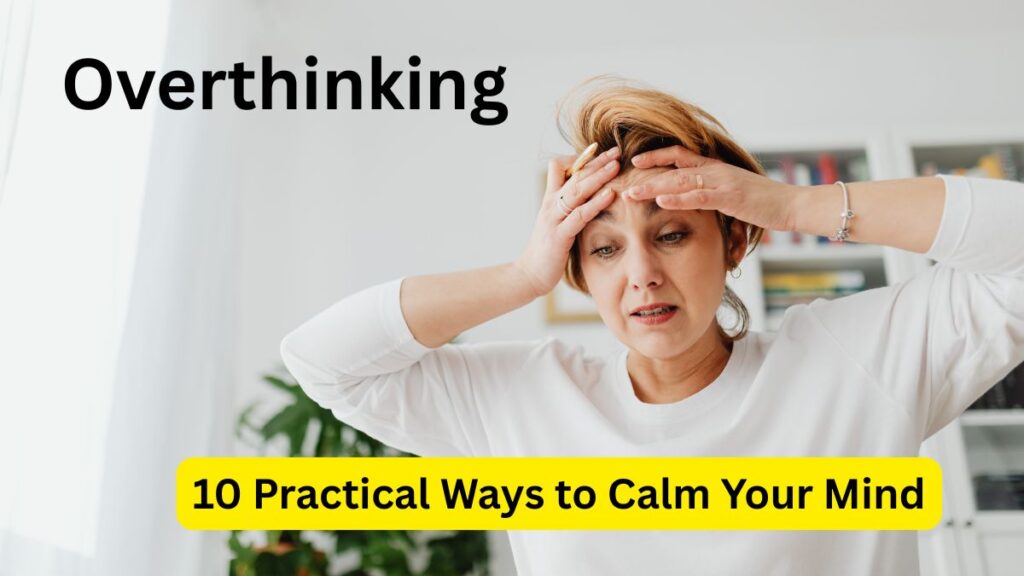
Simple Techniques to Reduce Overthinking and Live with Greater Peace
How to Stop Overthinking Naturally
How to Stop Overthinking Naturally: 10 Proven Ways to Calm Your Mind
Learn how to stop overthinking naturally with 10 practical techniques. Reduce stress, improve decision-making, and enjoy a calmer, happier life.
How to Stop Overthinking Naturally: 10 Practical Ways to Calm Your Mind
Have you ever replayed the same conversation in your mind over and over again? Have you spent hours worrying about something that might never happen? Do you find it difficult to make decisions because you keep thinking about every possible outcome?
If your answer is “yes,” you are not alone.
Overthinking has become a common problem in today’s fast-paced world. Students worry about exams and careers, professionals worry about deadlines and job security, and parents worry about their families. While thinking carefully before making important decisions is helpful, excessive thinking often creates unnecessary stress and anxiety.
The good news is that overthinking is a habit, and like any habit, it can be changed. By making small changes in your daily routine, you can train your mind to become calmer and more focused.
In this article, you’ll learn practical ways to stop overthinking naturally and improve your mental well-being.
What Is Overthinking?
Overthinking means repeatedly analysing the same situation, problem, or decision without reaching a conclusion.
Instead of solving the problem, your mind keeps going in circles.
For example:
- Replaying past mistakes.
- Worrying about future events.
- Imagining the worst possible outcome.
- Constantly questioning your decisions.
This cycle drains your energy and makes it difficult to enjoy the present moment.
Why Do People Overthink?
There are many reasons why people overthink, including:
- Fear of failure
- Fear of making the wrong decision
- Lack of self-confidence
- Stress at work or school
- Past negative experiences
- Perfectionism
- Desire to control every situation
Understanding the cause is the first step toward overcoming it.
Signs That You Are Overthinking
You may be overthinking if you:
- Constantly replay past conversations.
- Struggle to make simple decisions.
- Imagine worst-case scenarios.
- Have difficulty sleeping because your mind won’t stop.
- Feel mentally exhausted even after resting.
- Worry about things beyond your control.
Recognising these signs early can help you take corrective action.
10 Practical Ways to Stop Overthinking Naturally
1. Focus on What You Can Control
Many people spend hours worrying about situations they cannot change.
Instead, ask yourself:
“Is this within my control?”
If the answer is “No,” let it go.
If the answer is “Yes,” take one small action today.
Action reduces anxiety.
2. Write Down Your Thoughts
Your mind becomes clearer when your thoughts are written on paper.
Maintain a journal.
Whenever you feel overwhelmed, write:
- What is worrying me?
- Why am I worried?
- What is the worst that can happen?
- What action can I take?
Writing helps organise your thoughts and reduces mental clutter.
3. Set a Time Limit for Decisions
Some people spend days deciding something that requires only a few minutes.
Not every decision deserves endless analysis.
For routine decisions, set a time limit.
For example:
- Choose within 10 minutes.
- Gather the facts.
- Make your decision.
- Move forward.
Remember, delaying every decision increases stress.
4. Practice Deep Breathing
When your mind is racing, your body also becomes tense.
Take five slow, deep breaths.
Breathe in through your nose for four seconds.
Hold for four seconds.
Exhale slowly through your mouth.
This simple exercise helps relax your nervous system and improves mental clarity.
5. Stay Busy with Meaningful Activities
An idle mind often creates unnecessary worries.
Spend your time on activities that add value:
- Reading
- Walking
- Learning a new skill
- Exercising
- Gardening
- Volunteering
Productive action leaves less room for unnecessary thinking.
6. Stop Chasing Perfection
Perfectionism is one of the biggest causes of overthinking.
Many people delay action because they want everything to be perfect.
Instead, aim for progress.
Remember:
Done is often better than perfect.
7. Limit Social Media
Constant comparison with others can increase self-doubt and overthinking.
Social media usually shows only the highlights of people’s lives.
Reduce unnecessary scrolling.
Use that time to improve your own life instead.
8. Talk to Someone You Trust
Keeping worries inside your mind makes them appear bigger.
Talk to:
- A trusted friend
- A family member
- A mentor
- A counsellor
Sharing your thoughts often provides a fresh perspective and emotional relief.
9. Practice Gratitude
Overthinking usually focuses on what is missing.
Gratitude shifts your attention to what is already good in your life.
Every evening, write down three things you are thankful for.
This simple habit gradually trains your mind to notice the positive.
10. Take Action Instead of Waiting
The best way to break the cycle of overthinking is to take action.
Even a small step creates momentum.
If you’re worried about an exam, start studying.
If you’re worried about your health, begin exercising.
If you’re worried about your career, learn a new skill.
Action is the strongest antidote to overthinking.
Common Mistakes That Increase Overthinking
Avoid these habits:
Trying to Predict the Future
No one can control every outcome.
Focus on preparation instead of prediction.
Seeking Constant Reassurance
Repeatedly asking others for validation reduces your confidence.
Trust your own judgment.
Thinking About Problems Before Sleeping
Avoid analysing difficult issues late at night.
Your mind needs time to relax before sleep.
Expecting Immediate Answers
Some questions require patience.
Not every uncertainty needs an instant solution.
A Simple Daily Routine to Reduce Overthinking
Morning
- Wake up at a fixed time.
- Practice five minutes of deep breathing.
- Write your top three priorities.
Afternoon
- Focus on one task at a time.
- Take short breaks.
- Avoid unnecessary distractions.
Evening
- Go for a walk.
- Limit screen time before bed.
- Write three positive things that happened during the day.
Small daily habits create lasting mental peace.
When Should You Seek Professional Help?
If overthinking:
- Continues for several weeks,
- Prevents you from sleeping,
- Interferes with work or studies,
- Causes constant anxiety or emotional distress,
consider speaking with a qualified mental health professional. Seeking support early can help you develop effective coping strategies.
Conclusion
Overthinking doesn’t solve problems—it often creates new ones.
You cannot stop every negative thought from entering your mind, but you can choose not to let it stay.
By focusing on what you can control, taking action, practising gratitude, and building healthy daily habits, you can train your mind to become calmer and more resilient.
Remember, peace of mind is not found by thinking more. It is found by thinking wisely and acting with confidence.
JivanMarg Insight
“A peaceful mind does not come from having all the answers. It comes from trusting yourself to handle whatever life brings. Stop worrying about every possibility and start living every opportunity.”
JivanMarg – सही चुनाव, बेहतर जीवन।
Frequently Asked Questions (FAQs)
1. What causes overthinking?
Overthinking is often caused by fear of failure, stress, perfectionism, low self-confidence, or uncertainty about the future.
2. Can overthinking affect physical health?
Yes. Persistent overthinking can contribute to poor sleep, headaches, muscle tension, fatigue, and increased stress levels.
3. How can I stop overthinking naturally?
You can reduce overthinking by practising deep breathing, journaling, limiting social media, staying physically active, focusing on what you can control, and taking action instead of delaying decisions.
4. Is overthinking the same as anxiety?
Not always. Overthinking can occur on its own or alongside anxiety. If it becomes persistent and significantly affects daily life, it’s advisable to seek guidance from a qualified healthcare or mental health professional.